Morpho | The open credit network for the world
Morpho is an open decentralized lending platform that operates for users to earn optimized yields, borrow at the best rates, and track positions in real time.
Intro to Morpho DeFi, Morpho Crypto & Onchain Lending
Morpho finance is a non-custodial, onchain lending protocol that powers efficient defi lending and crypto backed loans across Ethereum and EVM chains. The morpho protocol started in 2021 as a rate-optimizer layered on top of Aave and Compound, and has since evolved into independent infrastructure that allows permissionless lending and borrowing without intermediaries.
For newcomers: defi lending lets you lend or borrow assets directly through smart contracts. Overcollateralized loans require borrowers to deposit more collateral value than they borrow—meaning you can borrow stablecoins while keeping exposure to BTC or ETH. Morpho enables overcollateralized loans to protect lenders from default. The protocol is entirely non-custodial, keeping user control of funds at all times. The MORPHO token (often called morpho coin) serves as the governance and incentive asset at the heart of morpho crypto.
Why morpho defi matters now:
- Isolated lending markets reduce contagion risk across the ecosystem
- Permissionless market creation lets anyone deploy customizable markets
- Immutable contracts increase predictability for lenders and borrowers
- Institutional adoption is accelerating, with billions in total value locked
The sections ahead cover morpho blue, morpho markets, morpho v2, the full morpho lending lifecycle (morpho lend, morpho borrow, morpho repay, morpho refinance), market cap, and how to buy morpho.
What Is the Morpho Protocol? (Morpho Finance, Morpho Labs, Morpho v2)
The morpho protocol is a set of immutable smart contracts on Ethereum and other chains that power permissionless, non-custodial lending markets. Anyone can integrate these open-source contracts to build lending products without asking permission.
History and team. Morpho labs was founded by Paul Frambot and Merlin Egalité in 2021. The team initially built Morpho Optimizer—a layer over Aave and Compound designed to optimize yields through peer-to-peer rate matching. That early product proved the concept; the team then built standalone infrastructure.
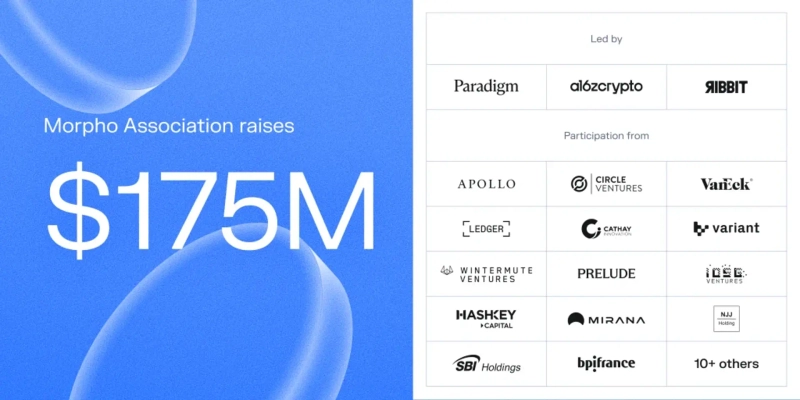
Governance and funding. The Morpho DAO, powered by morpho tokens, handles governance decisions: approving oracles, interest rate models, and risk parameters. Morpho has raised over $68 million from major investors including a16z Crypto, Variant, Pantera, ribbit capital, and coinbase ventures. More recent rounds have pushed the total even higher, signaling strong long-term confidence from investors.
Architecture and morpho v2. Morpho v2 improved on the initial design with isolated lending markets, more efficient interest rate curves, and better capital utilization for both lenders and borrowers. The separation is clean: morpho labs builds, the DAO governs, and the protocol operates as developer friendly open-source contracts. Morpho's contracts have undergone more than 25 audits for security, making it a resilient platform for onchain lending at scale.
Interestingly, the prefix morpho- is derived from the Greek morphḗ, meaning form or structure. Morpho is also a genus of Neotropical butterflies found mainly in South America. Morpho butterflies are known for their large size and brilliant blue coloring—the blue color of morpho butterflies comes from microscopic, light-scattering scales on their wings. In biology, morphology is the study of the form and structure of organisms, including observable traits such as leaf shape and body size. Experimental morphology studies the effect of factors on the form of organisms, while morphospecies defines species based on their unique physical characteristics rather than genetic data. Even morphological image processing uses structural elements to analyze and process shapes in images. The protocol's name nods to this idea of structure and form—fitting for a system built around structured, modular lending.
Core Architecture: Morpho Blue, Morpho Markets & Morpho Variable Markets
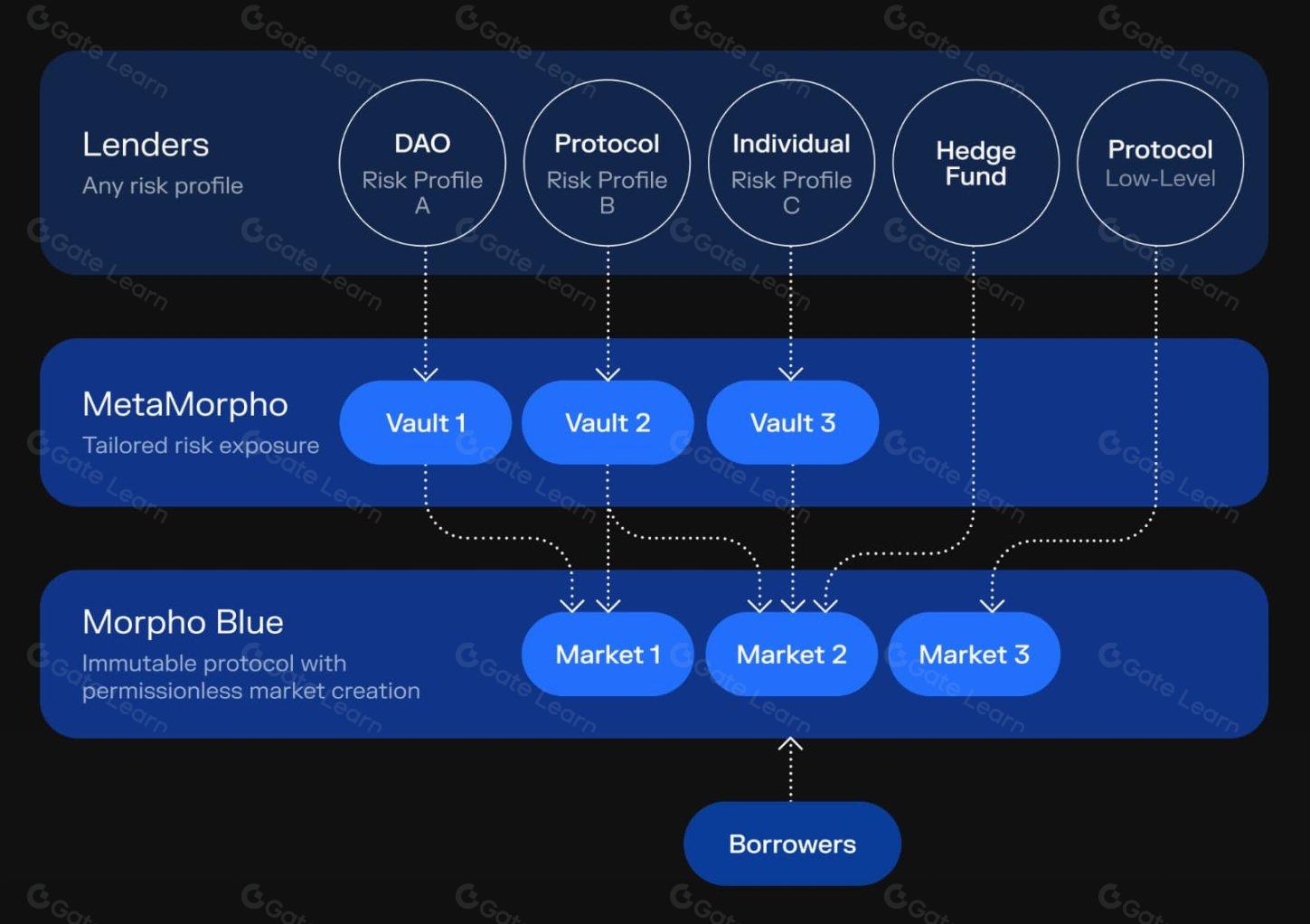
Morpho blue is the minimalist, immutable, and permissionless lending layer launched in 2024. It lets anyone create morpho markets—individual isolated lending markets defined by five fixed parameters:
- Collateral asset (e.g., wstETH, WBTC)
- Loan asset (e.g., USDC, WETH)
- Liquidation Loan-To-Value (LLTV) (e.g., 86%)
- Oracle (e.g., Chainlink price feed)
- Interest Rate Model (IRM) (e.g., AdaptiveCurveIRM)
Once deployed, these parameters are locked—no governance vote or protocol upgrades can change them. Morpho supports isolated, customizable markets, and this isolation means bad debt in one morpho market does not affect capital in another. Morpho allows permissionless market creation for users, and supports a wide range of crypto assets for lending.
Morpho variable markets are lending markets where interest rates float dynamically based on utilization and demand. Higher borrowing demand pushes rates up; lower demand brings them down. This contrasts with potential fixed-rate designs coming under Markets V2.
Here's how a typical market looks:
- Collateral: wstETH
- Loan: USDC
- LLTV: 86%
- Oracle: ChainlinkV2 wstETH⇄USDC
- IRM: AdaptiveCurveIRM
A more conservative market might use WETH–USDC with 80% max LTV, reflecting lower collateral volatility. This permissionless market design with low gas consumption makes morpho blue attractive for both retail users and businesses building embedded lending products—a pattern sometimes called the defi mullet.
How Morpho Lending Works: Morpho Lend, Morpho Borrow, Morpho Repay, Morpho Refinance
The morpho lending lifecycle has four core operations. Here's how each works.
Morpho lend. To morpho lend, connect your wallet and deposit assets (USDC, USDT, DAI, WBTC, ETH) into a morpho market or morpho vaults. Lending vaults, also called MetaMorpho vaults, let curators allocate your deposits across multiple morpho blue markets to earn yield and optimize yields. Lenders earn interest based on market demand for borrowed assets—the more borrowers draw from a market, the higher the improved interest rates for supply.
Morpho borrow. To morpho borrow: (1) connect your wallet to the morpho protocol interface, (2) choose a morpho market matching your collateral and desired loan, (3) post collateral (e.g., ETH), (4) specify the amount to borrow within the LLTV constraint. Users can borrow stablecoins using Bitcoin as collateral, or borrow assets against any approved token. The protocol enforces overcollateralized loans—you must deposit more collateral value than you borrow.
Morpho repay. Borrowers morpho repay by sending the borrowed asset back to the market at any time. You can repay partially or fully, reducing outstanding debt and improving your health factor. Once debt drops, you can withdraw excess collateral from your position.
Morpho refinance. Morpho refinance allows you to move a position from one morpho market to another—say, from a higher-rate pool to a cheaper one. Using the Morpho SDK bundler, collateral and debt shift in a single efficient transaction. This makes it easy to chase better interest rates without manually unwinding positions.
Risk & Mechanics of Overcollateralized Loans in Morpho DeFi
Overcollateralized loans in morpho defi mean borrowers must deposit more collateral than the loan value. This protects lenders: if a borrower defaults or collateral value drops, there's a buffer to recover funds. Morpho requires overcollateralized loans for borrowing assets across all morpho markets.
Health factor and LTV. Each morpho market or morpho variable market has a fixed LLTV—say, 86%. Your current LTV is calculated as borrowed value divided by collateral value. Health factor equals (collateral value × LLTV) ÷ borrowed amount. When health factor falls to 1, liquidation occurs if collateral value falls below required thresholds.
Example. Deposit 1 BTC valued at $60,000 into a BTC/USDC market with 75% LLTV. Borrow $30,000 USDC—current LTV is 50%, health factor well above 1. If BTC drops to $40,000, LTV rises to 75%, hitting the liquidation threshold. Liquidators repay the debt, seize collateral plus a bonus (typically ~5%), and the position is closed onchain. Any shortfall becomes bad debt isolated to that specific market.
Smart contract and oracle risks. Smart contract vulnerabilities are a major risk in defi lending—code bugs or oracle manipulation can trigger wrongful liquidations or fund losses. Morpho's contracts have undergone more than 25 audits to mitigate this. In April 2025, a $2.6 million exploit was thwarted before funds were lost, demonstrating the protocol's secure monitoring. Still, users should understand vault or market configuration and verify oracle sources before supplying liquidity. Higher collateralization factors provide additional safety margins for risk-averse lenders.
Morpho Token, Morpho Coin, Tokenomics, Market Cap & How to Buy Morpho
The MORPHO token (morpho coin) is the protocol's governance and incentive asset. Holders vote on parameter changes, new morpho markets, and treasury allocation. MORPHO rewards may also be distributed to morpho lending participants in specific markets or morpho vaults, encouraging deeper liquidity and ecosystem growth.
Tokenomics. MORPHO tokens have a maximum supply of 1 billion (total supply). Allocations span community, team, investors, and foundation, with vesting schedules spanning multiple years. The circulating supply sits around 660 million tokens. Market capitalization equals circulating supply multiplied by price—Morpho has a market capitalization of $1.28 billion. Fully diluted valuation (market cap using total supply) runs higher. Morpho's daily trading volume is approximately $17 million, with data available on major aggregators.
How to buy morpho. Morpho tokens are listed on exchanges like Coinbase and OKX, plus decentralized exchanges like Uniswap. The most active trading pair is MORPHO/USDT on Bitget.
Steps to buy morpho:
- Choose a trusted exchange listing MORPHO (Coinbase, OKX, Bybit, Bitget)
- Deposit USDC or USDT into your account
- Execute a trade for MORPHO
- Withdraw to a self-custodial wallet (e.g., MetaMask)
- Add MORPHO manually using the official token contract address
Always verify the contract address from trusted sources like official Morpho docs or CoinGecko before adding the token to your wallet. This protects against phishing or scam tokens on chain.
Real Use Cases: Morpho Loans, Morpho Steakhouse USDC & Institutional Onchain Lending
Institutional integration. Coinbase has embedded Morpho's credit rails to offer Bitcoin-backed USDC morpho loans to customers. Users deposit BTC as collateral and borrow USDC—without selling their holdings. This demonstrates morpho finance as core onchain lending infrastructure for major businesses and exchanges, eliminating the need for external intermediaries.
Retail use. Retail users tap morpho loans for tax-optimized liquidity: borrowing stablecoins instead of selling ETH defers capital gains. Others use leverage strategies or hedge market volatility. A DAO treasury holding BTC might borrow stablecoins to deploy in defi without reducing BTC exposure, then morpho refinance between markets as rates shift.
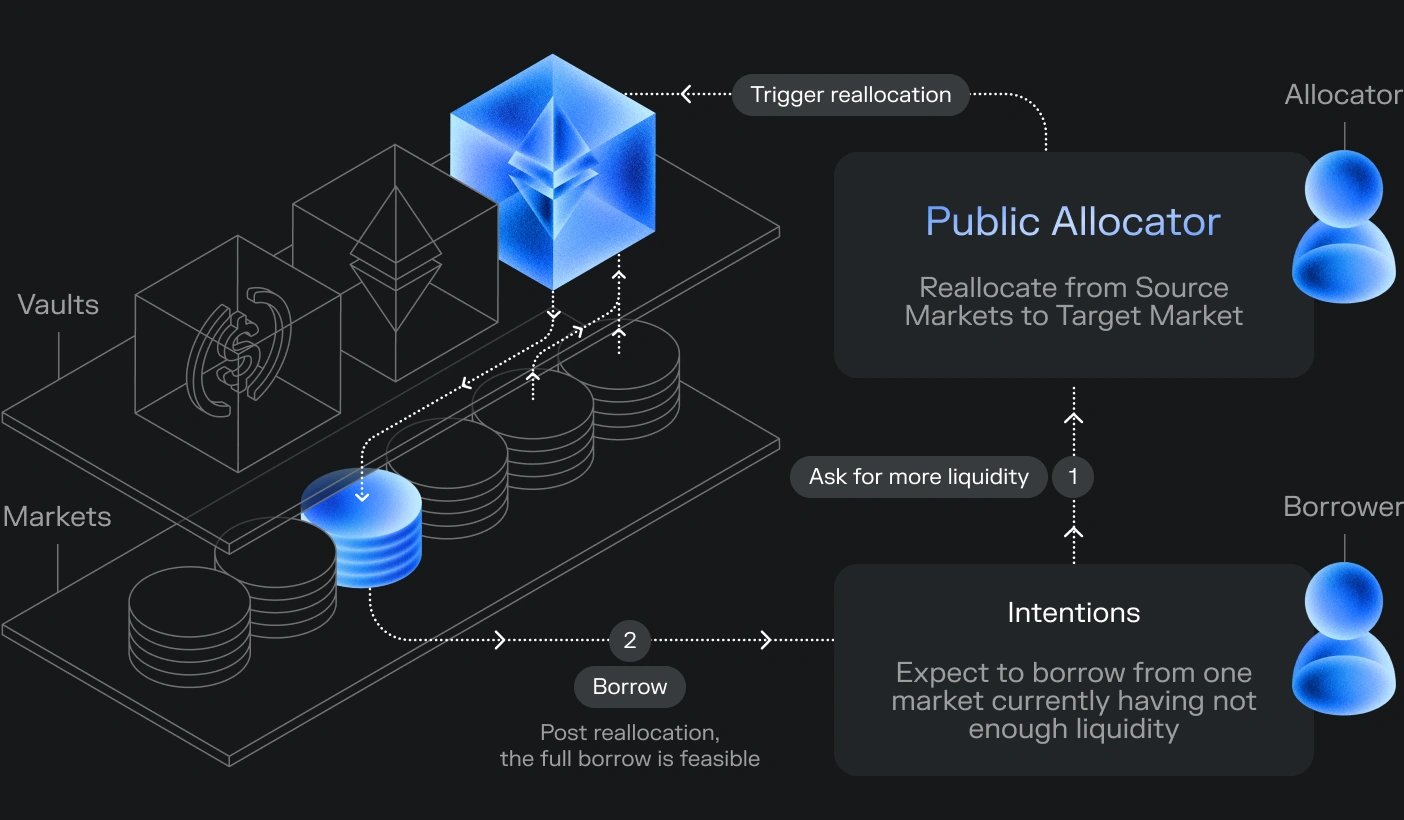
Morpho steakhouse USDC. The morpho steakhouse usdc vault is a curated lending vault targeting USDC-based yield. A professional risk manager allocates deposits across multiple morpho blue markets (e.g., cbBTC/USDC, wstETH/USDC), letting depositors earn yield from diversified collateral exposure. Morpho vaults optimize yield across lending pairs while managing risk through permissionless risk management and absolute/relative caps.
Cross-chain expansion onto Base, Arbitrum, and other L2s means institutions and retail users can invest and access morpho markets with lower costs, broadening the protocol's reach across the ecosystem.
Step-by-Step: Using Morpho Crypto for Onchain Lending (UX, Safety & Best Practices)
A new user's flow for morpho crypto:
- Connect your wallet (MetaMask, Coinbase Wallet) to the official Morpho interface
- Choose between morpho blue markets (single pairs) or morpho vaults (curated strategies)
- Deposit collateral or supply lending capital
- Open a morpho borrow position if desired, keeping health factor well above 1
- Monitor your position via the dashboard
Safety checklist:
- Verify you're on the correct protocol UI—bookmark it
- Check market parameters (oracle, LLTV, IRM) match your risk tolerance
- Start with small test deposits before scaling up
- Maintain a buffer: borrow at 60–70% of LLTV, not the maximum
Monitoring and operations. Use analytics from DeFiLlama or Nansen to track morpho lending APYs, total value locked, and personal exposure. Morpho repay early if collateral price drops toward liquidation thresholds. Morpho refinance into more conservative morpho variable markets if volatility spikes.
Tax considerations. Yield from lending (interest) and collateral seized in liquidation events may be taxable in many jurisdictions. Track all morpho loans, deposits, and repayments with specialized crypto tax software for local reporting. Focus on accurate record-keeping to stay compliant.
Outlook: The Future of Morpho DeFi, Governance & Ecosystem Growth
Morpho blue, morpho markets, and immutable contracts position morpho finance as a long-term, censorship-resistant credit layer for Ethereum and L2 ecosystems. The architecture is secure, composable, and built for scale—exactly what decentralized protocols need for institutional-grade operations and funding.
The Morpho DAO, powered by morpho tokens, steers protocol evolution. Governance holders will guide the addition of new collateral types (potentially real-world assets), more dynamic interest models, and deeper cross-chain interop. Markets V2 and fixed-rate offerings under Midnight are in development, expanding the types of morpho loans available beyond variable-rate trading.
Compared to Aave and Compound, Morpho's differentiators remain clear: isolated markets, low gas consumption, permissionless market creation, and composability. Challenges include ensuring liquidity in exotic markets, managing oracle risk, and convincing risk-averse users to trust newer defi protocols. But with over 25 audits, strong funding, and growing institutional demand, the protocol is well-positioned.
Morpho crypto is becoming a key building block for onchain lending—for individual users looking to earn yield on idle assets and for large institutions embedding lending rails at scale. Whether you want to morpho lend, morpho borrow, or simply track the morpho token, the protocol rewards those who take the time to understand its structure.